Category: News

  • Local Author Bonnie Park Talks Six Weeks for Boat Mail

    From Arts Council | Park City & Summit County

    Six Weeks for Boat Mail is the second in the WWII era trilogy, written by local author Bonnie Park and based on years of correspondence between her parents. “To me,” says Park, “these letters are their most significant legacy. I am grateful for the opportunity to champion this period in history and share their unusual story.”

    Robin and Buster Park celebrated their 70th wedding anniversary in June 2011, then both passed within ten months of each other. When the treasure trove of letters was discovered, Park learned so many new things about her folks. “I never knew they packed up and moved multiple times over two years, 1942 – 1943, fort to fort, as mandated by the Army,” Park explained. “I’d like to know how they felt about that, as well as the details surrounding war bonds, ration books, blackouts and the internment of American citizens of Japanese descent.”

    The letters revealed aspects of her parents’ personalities. “Buster exhibits many of the characteristics of an only child – ambitious, achievement oriented, and especially close with his parents, Nat and Ethel. In Boat Mail, we learn Buster disliked ‘insisting’ and preferred Robin make her own decisions. Yet delayed gratification didn’t suit him, so he comes across as controlling.”

    “With a Smith College diploma, Robin pushed back against gender stereotypes of the time, resisted Buster’s control, and fulfilled her desire for a ‘summer to play in,’ explains Park. “Following the Japanese attack on Pearl Harbor, patriotic fervor and the birth of their firstborn son, Robin’s consciousness leveled up to important responsibilities, but it didn’t crush her playful soul.”

    Park’s own personality comes through in her use of an interjecting voice as she reveals an interesting gem of history and spontaneously comments to connect with the reader. “I found representation of the miracle balm, ‘Mother’s Friend’ hilarious,” says Park. “Childbirth relieved of pain and danger! Happy mothers and perfect children… shortens the time and agony of labor.”

    In addition to information gleaned from the letters, Park has done an amazing amount of research to provide narration on world events, cultural trends, commercials, music and many other signs of the times that immerse a reader into the era.

    What would Park like her readers from this era to know? “History is relevant. Evil world leaders still exist,” says Park. “Ask yourself, as Buster did, ‘Where is that co-operation of great and small which made democracy work by virtue of the very mass and excellency of ideas produced by people of all classes…’ Think on that.” Six Weeks For Boat Mail is available locally at Dolly’s, or may be ordered from any independent book store. Both paperback and Kindle formats are available on Amazon.

  • Smell of the Beach in the Bottle

    Smell of the Beach in the Bottle

    Been spending some time in the sun this summer?

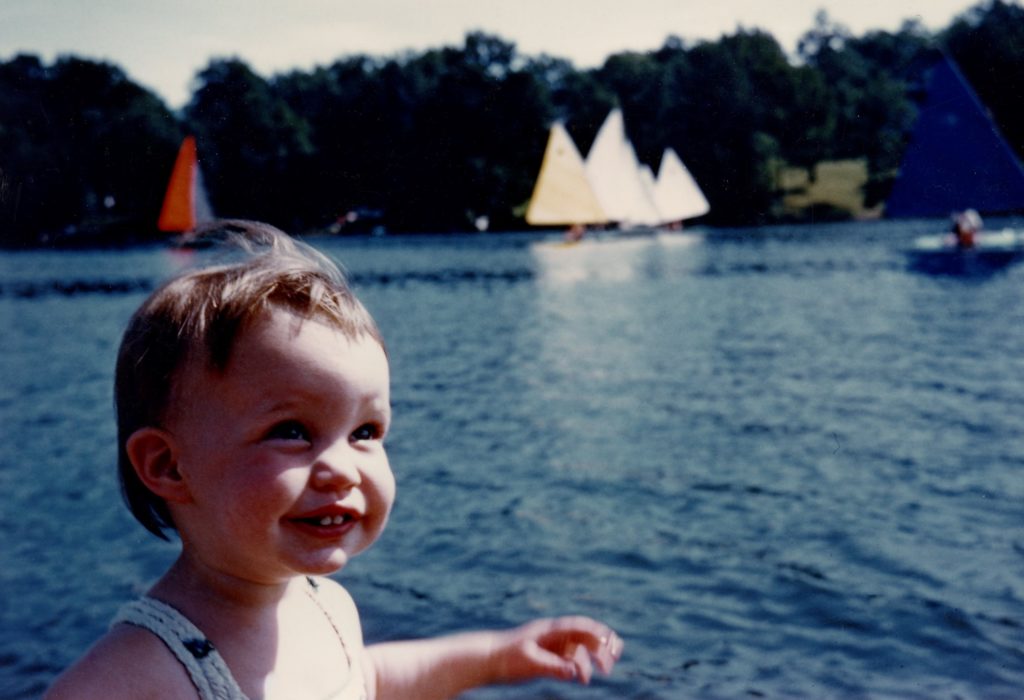
    The author circa 1958, Island Beach, Mountain Lakes, New Jersey

    Sigh. The perfection of exposed golden skin in one’s youth is one of nature’s richest gifts. 

    Evil as it may be.

    In Brides of 1941, it surprised me to learn my twenty-year-old aunt, Dorothy, freely abandoned herself to worship in the Chilean summer sun of 1941. She wrote to her sister, Robin… Been going riding almost every morning at 8:00 for quite a while – and along with golf twice a week – plus hikes – and swimming I’m getting good and tanned up –  ’Bout as brown as you me thinks – Mother has a fit because I haven’t a hat to shade my face – and even if I had one I wouldn’t wear one – or the visor she tries to make me wear – It’s really a healthy life – and I love it…

    What surprised me? Creamy white skin was fashionable during the fair skinned ’40s. A canvas for the reddest of lipsticks emphasizing a kissable cupid’s bow. Medically speaking, a good sunbath was “healthy” as a vitamin D supplement to ward off rickets, but a deep tan wasn’t necessary. Except that, even then, fashion magazines the likes of Vogue, and the celebrity fashionistas they featured, promoted tanning as a symbol of youth, beauty and wealth.

    For me, a babe of the late 50s and a teen of the 70s, the die was cast. 

    My mother, Robin’s, ability to tan was enviable. On that point, I won my dad’s genes in the lottery: fair and freckled. 

    SMELL MEMORIES

    Thinking back on my bucket and shovel days, Robin’s brand loyalties are remembered vividly. She hauled two brands of suntanning lotion in the beach bag.

    Basted with the famed and fragrant French formula, Antoine’s Bain de Soleil, her golden summer tan was enviably dark. It paired well with her circa ’60s flower-petal swim cap and skirted floral swimsuit. Before Sun Protection Factors were ever listed, the orange gelee formula she applied was rich in moisturizing oils. Possibly SPF 2. For me? It was more a “sandscreen.” Sand, effectively stuck to the gel, provided a crusty second line of defense.

    I suppose I was best protected swaddled in the terrycloth warmth of my cartoon hero, Casper the Friendly Ghost beach towel.

    Sea & Ski, packaged in a distinctive swoopy-shaped dollar-green bottle, resembled both an ocean wave and a carved turn. The lotion followed sun seekers from the beach to the mountains. Their label spun the tag: Tans you dark, tans you fast, protects against sunburn. In search of a smell memory I discovered the brand was discontinued. But now, by the miracle of cyberspace, I’ve learned it’s been resurrected in a variety of SPF’s at https://seanski.com/. Call me the bullseye of their nostalgia-based marketing.

    Evidence that Robin was sun damage savvy, she often scolded me, “Mad dogs and Englishmen go out in the mid-day sun.” Though I didn’t know it until now, they were lyrics borrowed from English playwright, composer, actor, director and singer, Noel Coward circa 1931.  Just as my aunt Dorothy didn’t listen to her mother (who probably lectured with those exact words), I ignored mine.

    In my teenage years, the standard marinade was Johnson’s® Baby Oil, occasionally magnified by a foil reflector in the noon day sun. Take it a step further. I also subscribed to the “healthy tan” my aunt enjoyed as a by-product of outdoorsy activities. Pep, ginger and playfulness defined her and me, without a hat.

    For lack of the baby oil schtick, my mother and aunt never suffered skin cancer consequences. But, now in my sixties, I’ve got scars that tell stories. Surgeries for malignant melanoma and squamous carcinoma have left their mark. They’re not pretty. Lucky for me I caught them early; I know (and knew) others less fortunate.

    As for my children, I am grateful for many things, among them this:

    To be beach-ready in the early 1990s, “squirmy screening” top to toe was a required ritual that often met with resistance. At the time, Coppertone® WaterBABIES® took the sun protection factor seriously. Though their brand loyalties have changed with age, I can say with certainty the distinctive fragrance of Coppertone is the permanently etched smell memory of their childhood.

    Equally unforgettable remains this seriously academic question posed by my then four-year-old. For the sake of youthful innocence, it is one to forever remain unanswered:

    “How do they get the smell of the beach in the bottle?”

  • Confessions of a Collector’s Wife

    Confessions of a Collector’s Wife

    I am no stranger to WWII collections and memorabilia, but I won’t pull your leg. I’ve had to adjust. 

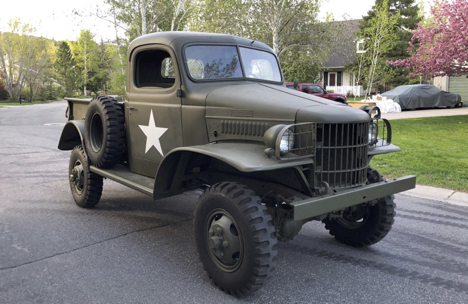
    “Cause for divorce,” was one woman’s candid opinion when she shook her head in disbelief at the sight of a World War II Dodge half-ton truck and a bunch of spare parts that fully occupied our two-car garage. It was more than a quarter-century ago when it first arrived; small children circled our feet.

    I replied, “I’ve divorced the garage.” 

    Readers of Brides of 1941 know this about my youth… “With tribulation I slept in [my father] Buz’s down-filled WWII olive drab mummy bag at Girl Scout camp. His army helmet, a Japanese flag, and a short-wave radio were among the memorabilia scattered from basement to bedroom in our house on Crane Road.”

    I also slept in a pungently musty canvas pup tent; a smell memory sharply awakened at the 42nd Annual Swap Meet and Military Vehicle Display held at Camp Plymouth, California, April 2019. During the event, I wasn’t asked to set up housekeeping in one of those “shelter halves” but they were fully present. Big military issue “command post” tents, too.

    The event, sponsored by The Military Vehicle Collectors of California furthers their mission: 

    “Dedicated to the acquisition, preservation, restoration, safe operation and public education of historical military transport and related equipment.”

    The author rests her hand on a “mule”–efficient all-wheel transport, Army-style, around the camp.

    I accompanied my husband, Pete, as a sidekick. He attended with the intention to sell spare Dodge parts; cast-offs from his restoration projects. 

    And he did!

    I brightened up the booth space with a display to sell and sign books.

    These are the likes of my people! 

    Compared to how soldiers “made do” through history, our accommodations in a weather-worthy REI Half Dome with generous head room ranked 5-star.

    Owners of a 1918 Harley Davidson; the side car rode like a baby carriage. History lovers top to toe!

    The orange backpacking tent Pete and I occupied stood out like an oversized California poppy in a sea of Army green. It was pitched on the outskirts of the “SWAMP.” Why? The “SWAMP” was authentic; right down to the cookery and campfire tinder.

    Look at the tipsiest tent to the right, propped with a stick! A rudimentary shelter when first used during the Civil War. No end flaps for several iterations in design. Condensation collecting on the inside was unheard of; the wind whistled through.  

    Pup tents: Haven for troops on the move since the 1860s.

    The MVCC Swap Meet has moved a few times in recent years; Plymouth proved a first-rate host venue with rave reviews.

    One of my favorite things about this show was the variety of vehicles. I’ll flavor it for you with a few of my photos: 

    Eligible contestants round up for “Jeep Judging.” Reward for excellence in military preservation and restoration.
    Yes, Sir! Authority goes wherever this baby roams.
    Apparatus in the capable hands of “Fire Fighters in Fatigues.” Soldiers who staffed the Army Engineer’s Fire-Fighting platoons.
    Everyone gave this attention- grabbing bomb carrier a wide berth as it made several passes through camp.

    What are my personal takeaways from attendance at my first Military Vehicle Preservation Association swap meet?  

    A Dodge 3/4-ton ambulance built for front line and field action.

    If it makes your heart sing to watch authentic WWII rolling stock in a Memorial Day or Fourth of July parade, these are the people to thank. I’ve witnessed first-hand (in my own garage) the time, effort and expense committed to a labor of love. Countless hours researching and seeking out “correct” parts; some “parted out” from a too-far-gone metal heap found on a farm. It’s a messy business, pounding, grinding, welding, painting, polishing; they operate in a no-excuse zone to get it right. 

    What eyebrow-raising whispers did I hear about the Spring 2018 MVCC gathering and swap meet held in Petaluma last year? The military vehicle convoy that rolled through town was thought to be militia activity; a threat. A police escort saw them out. No way! Owners of restored historic military vehicles on an adventure with other enthusiastic hobbyists?

    I am a Boomer. I learned something of WWII service listening to my father’s stories. I’ve learned lots more researching and writing about him as a character in that time period. I’ve also met and respected tight-lipped veterans who refused to speak of their experience. Not so with the show-and-tell collectors at Camp Plymouth. A sea of parts, pins, pictures, posters for sale, table after table, provide spectacular conversation starters, often ending with a keepsake to take home.

    Without events like this, and the clubs and communities that step up and work hard to make them happen, we would be without reminders of what the Greatest Generation fought for. It’s impossible to appreciate their service and sacrifice unless stories are shared. So patriotic. So committed.  

    In 1943, Franklin D. Roosevelt summed it up the way I like to think about it.   

    “We have faith that future generations will know that here, in the middle of the twentieth century, there came a time when men of good will found a way to unite, and produce, and fight to destroy the forces of ignorance, and intolerance, and slavery, and war.” 

    Maybe young and old need a time-out in a pup tent and a ride in a military vehicle to reflect on the years when nearly the whole world was at war. It took strategic and relentless military might across Europe and nuclear weapons bombing Hiroshima and Nagasaki to end it.  

    I make this point in Brides of 1941“history, independent thought and the dignity of free will could be usefully applied to level up our collective ethical awareness and common future.”

    For me, those are the thoughts and feelings that rub off walking through a Military Vehicle Collectors Club swap meet. Peace.

  • Why Move To Chile In 1911?

    Book groups!  I love the discussion. Especially when readers ask good questions. It proves they have put their imaginations to work. 

    Brides of 1941 raises this puzzler: Just how did born and bred North American characters from the Northeast (namely T. Wayne and Lelia McLatchey Skinner) land in a “company town” in the Andes Mountains of South America at a time when the calendar had barely flipped into the twentieth century?

    This is the story of how T. Wayne found his way to Chile in 1911, where Lelia joined him as a young bride in 1916.

    El Teniente, Pueblo Hundido

     ORIGINS OF EL TENIENTE 

    Copper deposits at the “El Teniente” mine were known for centuries – dating back to the Spanish conquest that followed the 1520 landing of the famous Portuguese explorer we all studied in fourth grade; Ferdinand Magellan!

    The red metal was, among other raw materials, exported by the Spanish. Eventually Chile broke from Spanish rule in 1818 following an eight-year struggle for independence (although Spain did not fully recognize Chile diplomatically until 1844).

    In the second half of the nineteenth century, the el Teniente property was owned by a group of wealthy Chilean families – aristocrats who turned their economic interests toward the profitability of agricultural production and commerce. Commodities like grapes were pressed into wine for Holy Communion. Mining and processing copper ore was not their bailiwick. Boom. Operations ceased after the mine flooded during the winter of 1889.

    The Chilean government looked to foreign investment to reclaim and capitalize el Teniente. Enter MIT educated William Braden, a Butte, Montana mining engineer who surveyed the ore deposits in 1903 – 1904. In combination with his employer, E.W. Nash, the President of the American Smelting and Refining Company (est. 1898) and financier Barton Sewell, they founded Braden Copper Company in June 1904. Mining operations began in 1905. Three years later, Guggenheim Exploration bought rights to the Braden mine and an infusion of North American capital followed. Recall that the Guggenheim family’s legacy of philanthropy grew out of the extraction and refining of metals.

    CLASSMATES AT COLUMBIA SCHOOL OF MINES

    The nation’s first mining school, Columbia School of Mines, was founded in 1864. The engineers trained there brought forth cutting edge technologies. Drilling down on their studies, T. Wayne Skinner met Lester E. Grant, the son of a socially prominent family with a connection to the Guggenheims. Grant graduated in 1909 and accepted a position as mining engineer for Braden Copper. He moved to South America in 1910, the same year El Teniente began producing.

    When T. Wayne graduated from Columbia in 1911, he followed the long-distance path forged by his friend. He, too, accepted a position as a mining engineer with Braden Copper. It was the same year donkey carts gave way to the narrow-gauge railroad that snaked upward forty-five miles from the closest town, Rancagua. The railroad connection opened the door for development of a model “company town” on the hillside above el Teniente.

    El Teniente
    LOC Carpenter Collection

    THE ORIGINS OF KENNECOTT COPPER

    In 1915, the Guggenheims merged their mining properties to form Kennecott Copper Company. Their original mining property was the Bonanza mine in the territory of Alaska.  Author Ron Simpson writes about the history of people and place surrounding the Alaskan enterprise in this historic novel, Legacy of the Chief. Check out his blog https://ronsimpson.blogspot.com/ or buy the book and plan a trip!

    What had once been Kennecott’s primary mine, with a great mass of high-grade ore on the crest of a mountain overlooking the Kennecott river, became a remote outpost abandoned in 1938.

    Then what? 

    Financial gains from the Alaska mine were invested in other properties. Four were scattered around the western U.S.: the Bingham district of Utah (Utah Copper), the Nevada Consolidated holdings in Nevada, the Chino in New Mexico, and the Ray in Arizona.

    The only foreign mine property was the Braden works. They named this company town “Sewell” to memorialize Braden Copper’s first president, Barton Sewell, who died in 1915 – the year of the Kennecott merger. And as much as the Chilean enterprise might have been branded “Kennecott,” the Braden Copper Company (BCC) retained the Braden name.

    T. WAYNE SKINNER WEDS DR. LELIA MCLATCHEY

    In 1916, T. Wayne returned to his former stomping grounds in the northeast to marry the girl he’d met at Keuka College years before. The mining camp was no place for her when T. Wayne moved to Chile in 1910. Besides, Lelia was nose deep in books earning her degree at the Women’s Medical College of Pennsylvania. The long-distance romance held true. By 1916, BCC had adopted their vision for a model community. T. Wayne and Lelia were suited to toe the company line, advance good citizenship and model the sociological construct of a “traditional” family.

    You see, the key to success at el Teniente depended on a stable work force – men who would make a full-time career of mining and stay for extended periods. To that end, BCC fostered the formation of nuclear families and gender specific roles among the Chilean people. Men were the wage earners, women managed the home. Together a husband and wife could achieve middle-class respectability and (in theory) raise the next generation of mining families. 

    More on this restless subject is revealed in a book authored by Thomas Miller Klubock: Contested Communities –  Class, Gender and Politics in Chile’s El Teniente Copper Mine, 1904 – 1951. Another fresh perspective is found in the senior thesis of Katherine E. Grusky, Brown University, 2017: Digging Below the Surface: Women and Families in the El Teniente Copper Mine.

  • Raise Hell Like Molly Ivins

    SUNDANCE never disappoints when it comes to documentary premieres. If laughter is the best medicine, Raise Hell: The Life & Times of Molly Ivins nailed it. Director Janice Engel resurrected the larger than life spirit of Molly at the right political place and time in 2019. It documents the kick-ass journalistic career of a woman who poked at politicians and their hoo-hah with a Texas twang and this maxim: “The best way to get the sons of bitches is to make people laugh at them.” That was her style as an astute political activist right up until the day she succumbed to breast cancer in 2007, at age 62. I am among the legion of her admirers, though I didn’t know it until now. 

    Like Robin (the main character in Brides of 1941), Molly attended Smith College. There the traditions Robin experienced in the class of ’41 held true for Molly in the class of 1966 – Mountain Day, Float Night, Spring Dance, Rally Day, to name a few. Molly’s image on the big screen celebrated Ivy Day, the day before commencement, when seniors adorn themselves in pearls and white dresses and carry roses in a procession around campus. Unlike Robin, who earned “the most serious warning that Smith College gives” and nearly flunked out, Molly was a quick-witted superstar. 

    If there is a common theme for all “Smithies,” it is the long-held belief that women are capable of anything. And in the #TimesUp era that theme is finally rocking politics. (Knock Down the House, another Sundance 2019 documentary premiere, proves it. Watch it on Netflix.)  

    To match her indomitable spirit, Molly stood six big-boned feet tall with flaming red hair, a huge smile and vivacity that loomed larger than the Lone Star state she loved. Her gift? To crush political spin and deception with humor as sharp as a pointed stick: “Good thing we’ve got politics in Texas – finest form of free entertainment ever invented.” Based on six years of watching George W. Bush as governor, she co-authored the book Shrub (her nickname for “Dubya”) published in 2000. The sequel, Bushwhacked: Life in George Bush’s America, rolled out two years into his presidency, in 2003. To that she quipped, “If y’all had read the first book, we wouldn’t have had to write this one.” 

    The year before Molly passed, she penned this sage advice in her column: “It’s all about political courage and heroes, and when a country is desperate for leadership. There are times when regular politics will not do, and this is one of those times. There are times a country is so tired of bull that only the truth can provide relief.” 

    That is a Molly mantra to resurrect and repeat if for no other reason than to tickle the muse posted in my first blog: Just when did America get so messy?

  • Inconvenient Truths

    Picking up the thread of my last blog, think about that cash box moment in January 1981. Was it catastrophic? No. It was akin to being caught with your pants down without an audience. Why?  No one clamored outside the festival box office at the Egyptian Theatre that day. In a Band-Aid solution, I retrieved a steel box from my office at the Chamber of Commerce, assembled several denominations of bills to make change, then dashed back to Main Street. With little traffic (and not one traffic light in town) my volunteer helper was set and festival ready. 

    Fast forward to SUNDANCE, January 2000. I personally steered clear of that millennium chaos.  But it’s worth remembering this. Steadfast locals sacrificed a night’s sleep camped outside the box office at the Lower Main Street Plaza. They were the hard-core, celebrated veterans – an original cast of characters who by choice donned thermal underwear and sleeping bags to spend a mid-winter night on a sidewalk in the mountains. In the glory of self-sacrifice, they were rewarded with tickets and stories of hardship. 

    It was in 2006 when my teenage sons, then sixteen and thirteen, begged for tickets to the American adventure comedy film, The Darwin Awards. I failed them. Acting on the adage “half a loaf is better than none,” I took a wild chance on an unknown documentary. In the eighth row, podium side at the Park City Library venue we watched the world premiere of what would become this Oscar winner: An Inconvenient Truth. Al Gore accompanied by Tipper and family trooped down the south side of the auditorium to debut the game changing film. That was a SUNDANCE moment as Robert Redford intended it; storytelling as the greatest platform for getting people to pay attention and take action.

    Each year I recall those snapshot gems like a SUNDANCE sage. Standing shoulder to shoulder in festival cues with like-minded fans of the big screen, they are fun conversation starters. Humble beginnings are often worth sharing, particularly with documentary film fans. They are the ones who will take this thought-provoking message to heart. A quote that plays out in picture and verse with the playful characters in my book, Brides of 1941:

    “When we long for life without difficulties, remind us that oaks grow strong in contrary winds and diamonds are made under pressure.”

    – Dr. Peter Marshall

  • Rolling with Sundance Since the Beginning

    It was 1977 or thereabouts when I enrolled in a Media Studies class to fulfill a general education requirement at the University of Utah. One choice subject? The “Dollars Trilogy,” Spaghetti Westerns directed by Sergio Leone, starring Clint Eastwood; A Fistful of Dollars (1964), For a Few Dollars More (1965) The Good, the Bad and the Ugly (1966).  My amateur movie reviews respectably contemplated lighting, camera placement, symbolism and historical phenomena. It never occurred to me that a person could do that for a living.

    In Brides of 1941, Robin (the main character) finds herself in the right place and time in 1939. As I mention in the book, it was one of the most remarkable years in Hollywood history for releasing quality, iconic movies. Robin held her place beneath the cinema marquee, boosting ticket sales for first-run classics: Confessions of a Nazi Spy, It Could Happen to You, Man About Town, Grand Jury Secrets, Daughter’s Courageous, Undercover Doctor, Wife Husband and Friend, and The Wizard of Oz, to name a few.

    It’s why Leonard Maltin’s Classic Movie Guide rests on my desk dogeared and highlighted tracking Robin’s path through its pages.

    That bit of the past prompts me to pick up on the topic of SUNDANCE, because it’s that time of year in Park City, and I’ve coincidentally been around through iterations of name changes: Utah/U.S. Film Festival, United States Film and Video Festival, Sundance/United States Film Festival to just plain SUNDANCE.

    It all started late summer in Salt Lake, 1978 when it was known as the Utah/U.S. Film Festival. Three years later, in January 1981 the fledgling fest opened in Park City, where I lived and worked for the Chamber of Commerce at the time. To move the festival to Park City in the middle of winter was a strategic economic business decision all the way around. It would invite tourism dollars in the (then) post-holiday travel slump and worked equally well as a hook for film industry professionals. Since the 1930s people bought in to the glamour of skiing depicted in cinema. I make this point in Brides: “to discuss the sport, and more importantly to see and be seen doing the sport, defined a person as rather upscale and outdoorsy, then and still today.”

    One of my hats at the Chamber was to support special events, often enlisting and organizing volunteers to help. We relied on telephone land lines and kept promises. In 1982, The Egyptian Theatre was the main festival ticket outlet in town. Volunteers were assigned shift by shift. When the box office was scheduled to open, I popped up to Main Street to be sure all was in order. My volunteer helper was there, but helpless. Even though ticket prices were just $3.50 for individual film screenings ($30 for a package of ten), it was impossible to do her job without a cash box. 

  • Cahoots Park City has Brides!

    Brides of 1941 is now available from Cahoots gifts and cards near the Park City Market.

  • Elasticity of Time

    Welcome to my blog. May I ask if you like museums? If so, you will like it here. My older brother once remarked, “Your house is like a taking a stroll through time.” Point taken. As newlyweds on a shoestring budget, my husband, Pete, and I piece mealed our home décor with distressed mid-twentieth century furniture purchased at auction; a hall tree, a hutch, an icebox, a dough table and mis-matched bedroom sets. Eight years and $800 later a 1942 Dodge Power Wagon followed Pete home like a new puppy. A restoration project he rationalized at the time. A truck he believed our eight-month-old son would drive when he turned sixteen. Top speed 45mph.

    The snap of a 35mm Canon Sure Shot camera captures a 1990 moment.

    As a new mother, a wise soul once confided in me, “Children are your mark in time.” Every parent eventually comes to understand that universal truth. Then, as the generations that precede us pass, we wake up to the fact the line to the hereafter is suddenly shorter. That’s how it works.

    Brides of 1941 reminds us of the elasticity of time. It is a case study that reveals the words, thoughts, deeds and actions of a sampling of twentieth century American families. To quote this letter from my mother to my father: I got the full force of your ideas for the future – one of social justice, equality, and democracy for all, which I never had applied specifically before… Here is a tremendous field for work, dearest.

    Nearly eighty years later, how it can be so many fellow Americans and members of the U.S. Congress still question the equality of basic human worth?

    My muse? Just when did America get so messy?

    I can’t answer it yet, but I have faith our divided country will do better if only because of our children leading with social conscience and scientific fact.

    What we know of the Greatest Generation, and world freedoms they fought for, is worth preserving. From letters fashioned into this story we remember our America.  And in the restoration of militaria that lived through the action, we will never forget.

    A Power Wagon restored, June 2018

  • Brides of 1941 Delivers Something Old, Something New

    In February 1934, T. Wayne and Dr. Lelia Skinner leave their three children behind in North America. Lelia’s hand-wringing letters from “Campamento Americano,” the residential section of a Chilean mining camp, describe an over-worked existence. The Skinners commit to keep up with the expense of three college educations. It is through her candid correspondence Lelia opens the door to an authentic multi-general family saga.

    Their eldest daughter, Roberta, lands on the campus of Smith College in 1937. Beaus who rank on Roberta’s “man-score” include a “townie,” several ivy leaguers, and a Montana cowboy. Over Christmas break 1939, in Saint Pete, Florida, she dances with Buster Bedford, a Princeton “Tiger” graduate and Columbia Law School first year. As the Roosevelt administration strategically guides the nation toward U.S. involvement in WWII, Buster prepares himself for the effort while courting Roberta long distance. He implores her to join him in an uncertain future and presses for her hand.

    “When cleaning out the personal effects of members of the ‘Greatest Generation,’ it’s not all that uncommon to find boxes of letters,” says Park. Short of pushing them to the back of another closet what do people do with them? “Some suggest to ceremoniously burn them and return their energy back to the universe. Tragically, others choose to declutter them straight to a dumpster.”

    Over the course of a few years, Park transcribed her family’s correspondence without giving thought to publishing a book. Though she confesses, “lessons from a conference of personal historians lit up a passion.” A game-changer for Park. The testimony of struggles, hopes, dreams, laughter and fun of real people who are no longer with us is compelling.

    “The fact that my husband is an enthusiastic collector of WWII memorabilia also plays a hand in my writing.” The ghosts are afloat in their Park City home where khaki and olive drab dominate the color palate. “It’s like living in a museum,” she laughs.

    “I’m a little undone at this moment in history. I appreciate now more than ever the patient teaching moments of Robin and Buster, and how they informed my values.” Civil rights, the second wave of feminism and the Vietnam war dominated dinner table conversation in her childhood home.

    The lessons are universal. “We humans are often too quick to judge. Why others hide from uncomfortable conversations with family and friends that we can, and must, learn from.” In Park’s case, anxiety, depression and suicide were woven into the family fabric before mental health mattered enough to dominate headlines.

    When asked how her ancestors might feel about sharing their story with the world, Park has this to say. “They may not like it, but I say it’s time for those skeletons to begin the conversation other American families might want to have.”

    www.spikypigpress.com

    Email: bonnie@spikypigpress.com

    Mobile: 435-655-1635